Blog
Airports and major transit hubs present some of the most demanding conditions for architectural materials. High foot traffic, frequent cleaning, UV exposure, and the need for long-term visual clarity place unique performance requirements on finishes used for public art, wayfinding, and architectural graphics.
Kiln-fired graphic ceramic and porcelain tile is increasingly specified for airport and transit environments because imagery becomes a permanent part of the fired surface, offering long-term durability with minimal maintenance. This article outlines typical performance characteristics, appropriate applications, and coordination considerations for kiln-fired graphic tile in airport projects.
What Is Kiln-Fired Graphic Tile?
Kiln-fired graphic tile uses ceramic pigments and glazes that are fired at high temperatures, permanently fusing imagery into the tile surface. Unlike applied films, inks, or coatings, there is no topical layer that can peel, delaminate, or wear away over time.
The result is an architectural finish suitable for interior and exterior public environments where long-term performance and visual stability are required.
Why Kiln-Fired Tile Performs Well in Airport Environments
UV and Fade Stability
Ceramic pigments and glazes are inherently UV stable. When imagery is kiln fired, color becomes part of the tile surface, maintaining visual integrity even in skylit concourses and exterior applications.
Resistance to Graffiti and Cleaning Chemicals
Fired ceramic surfaces tolerate graffiti-removal solvents and routine maintenance chemicals without image loss. This is particularly valuable in transportation settings where rapid cleaning and vandalism removal are operational priorities.
Hard, Non-Porous Surface
Porcelain and ceramic tile provide a dense, non-porous surface suitable for frequent cleaning and long-term exposure to public use.
Low Maintenance Over Service Life
Because the graphic is part of the fired finish, there is no applied layer requiring replacement or refurbishment. This reduces lifecycle maintenance compared to vinyl graphics, coatings, or printed panels.
Typical Performance Attributes (Specifier Reference)
| Attribute | Typical Benefit in Airport / Transit Use | Notes |
|---|---|---|
| UV / Fade Resistance | Long-term color permanence | Fired ceramic pigments and glazes |
| Graffiti Resistance | Spray paint removal without image damage | Compatible with common graffiti-removal solvents |
| Chemical Resistance | Withstands routine cleaning agents | Refer to project-specific chemical resistance data |
| Abrasion Durability | Suitable for high-traffic environments | Finish selection critical for floors |
| Exterior Durability | Suitable for freeze/thaw and weather exposure | Porcelain bodies recommended for exterior use |
Performance characteristics depend on selected tile body, glaze, finish, and installation system and should be coordinated during design development.
Relative Suitability for Airport Conditions
| Performance Priority | Typical Strength (1–10) |
|---|---|
| UV / Fade Stability | 10 |
| Graffiti Resistance | 10 |
| Chemical Resistance | 9 |
| Cleaning Durability | 9 |
| High-Traffic Suitability | 10 |
Typical Airport and Transit Applications
Kiln-fired graphic tile is commonly considered appropriate for:
- Interior wall cladding in concourses and circulation zones
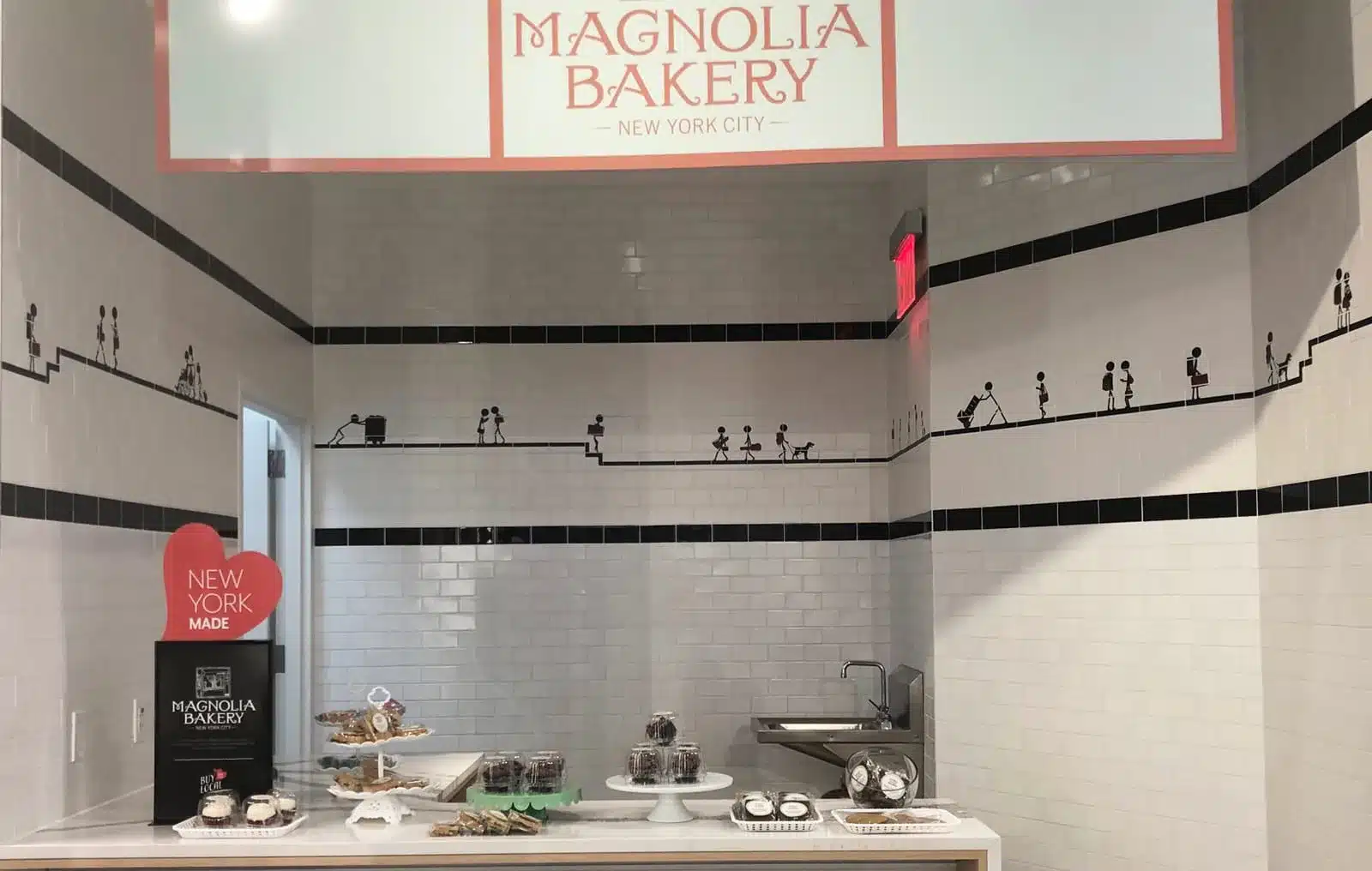
- Wayfinding bands and architectural graphic elements
- Exterior public art murals and building skins
- Station platforms and covered transit areas (when specified appropriately)
Floor applications require finishes meeting applicable slip resistance and DCOF requirements and should be evaluated on a project-specific basis.
Design, Fabrication, and Project Support
Design and Pre-Production
- Image review and scaling
- Color management for ceramic output
- Layout planning for murals and multi-tile graphics
Fabrication
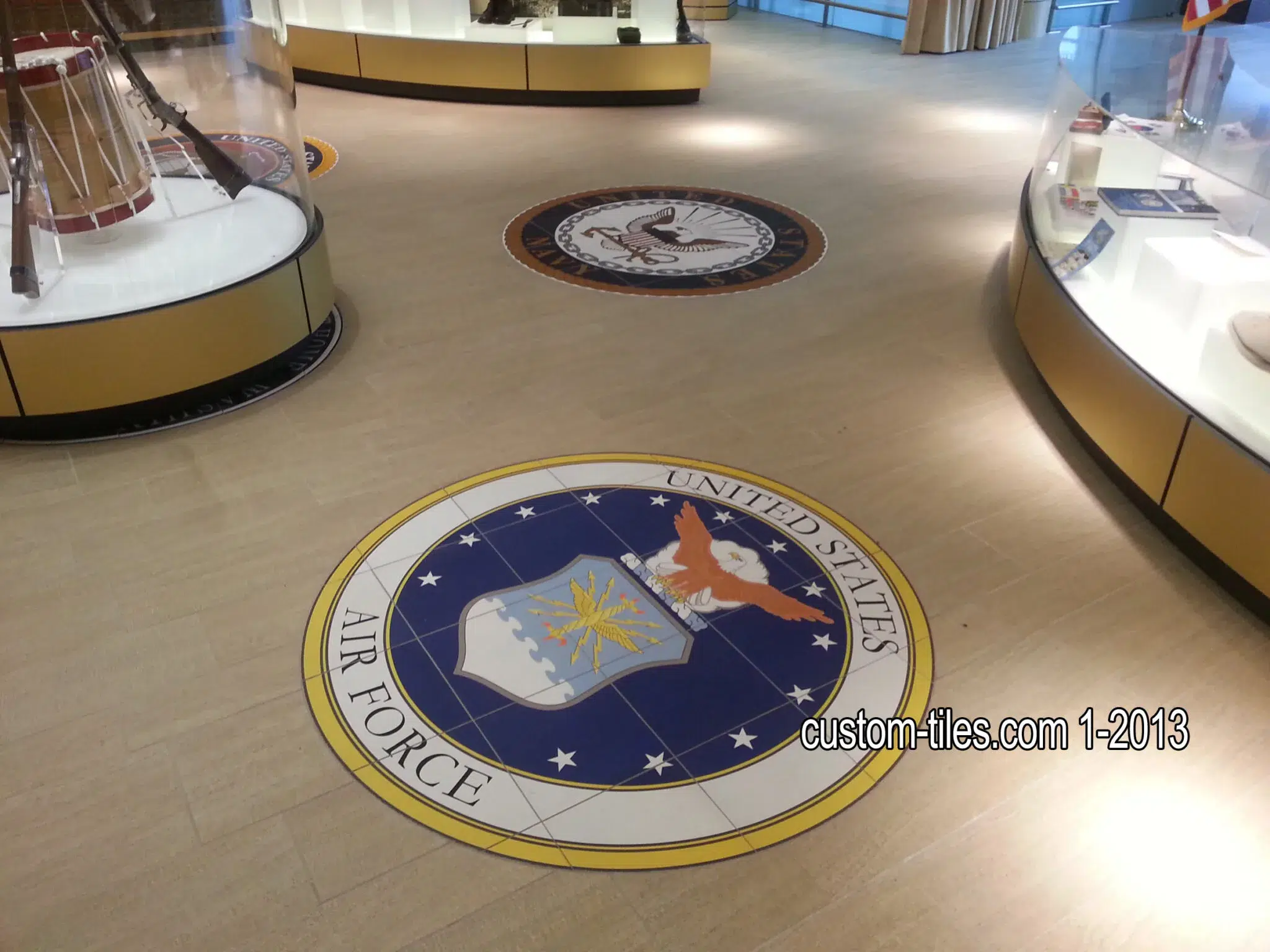
- Kiln-fired imaging on architectural ceramic or porcelain tile
- Custom sizing and formats
- Waterjet cutting (as required)
- Location-keyed layout maps for installation
Installation Coordination
- Placement guides for installers
- Coordination with qualified tile contractors
- Recommendations for substrates, setting materials, and grout systems
Submittals and Technical Data
Technical documentation is available for common performance properties such as:
- Chemical resistance
- Surface abrasion
- Slip resistance (Dynamic Coefficient of Friction)
Coordination During Design and RFQ Phases
For airport and large-scale public art projects, early coordination during schematic design or RFQ development is recommended. Confirming tile body selection, finishes, substrates, and maintenance requirements early helps ensure long-term performance and code compliance.
Reference Use in Proposals and RFQs
This article may be used as a general material reference for kiln-fired graphic ceramic and porcelain tile in airport and transit environments. Final specifications should be project-specific and coordinated with applicable standards, finishes, and installation requirements.
Additional Resources
- Outdoor Tile Murals Portfolio
- Printed Tiles Technical Specifications
- Graphic Tiles for Architectural Applications
- Tile Mural Installation Resources
- Download Specifier Reference PDF (Kiln-Fired Graphic Tile for Airport Projects)
- Request for Quotation form or email [email protected]
About Custom Tiles
Custom Tiles, LLC produces kiln-fired graphic tile for architectural and public art applications, supporting projects requiring durable, low-maintenance, and permanent imagery in demanding public environments. For over 25 years, Custom Tiles has produced bespoke imaged tiles for commercial and residential projects. We continue to grow by serving the hospitality industry, architects, general contractors, artists, and photographers—with timely, professional, and personal attention every step of the way. We hope to be of service to you.